Boosting your business with inclusive hygiene in public restrooms
Every day, millions of people head out of their homes for a myriad of reasons, from working and studying, to meeting friends and family at a restaurant or simply running errands. And in many of those cases, they will eventually need to use public toilets — it is only natural for them to expect that the facilities will be easy to use. But for many, that expectation isn’t always met. And, unknowingly, your facility could be part of that problem, not only putting barriers to hygiene but also hurting your bottom line.
So, let’s discuss which factors could be shaping how people experience hygiene in your restrooms, and how you can improve those experiences to boost your business.
Why are public restrooms distressing for some people?
Our research shows that 44% of people feel anxious about using toilets outside the home. [1] That's nearly half of all potential users at your facility, whether it’s customers, guests, or employees. So, why does this happen? Well, public restrooms are often designed with a 'one-size-fits-all' approach, and when businesses overlook the diverse needs of their visitors, it can make these spaces feel stressful instead of safe and comfortable.
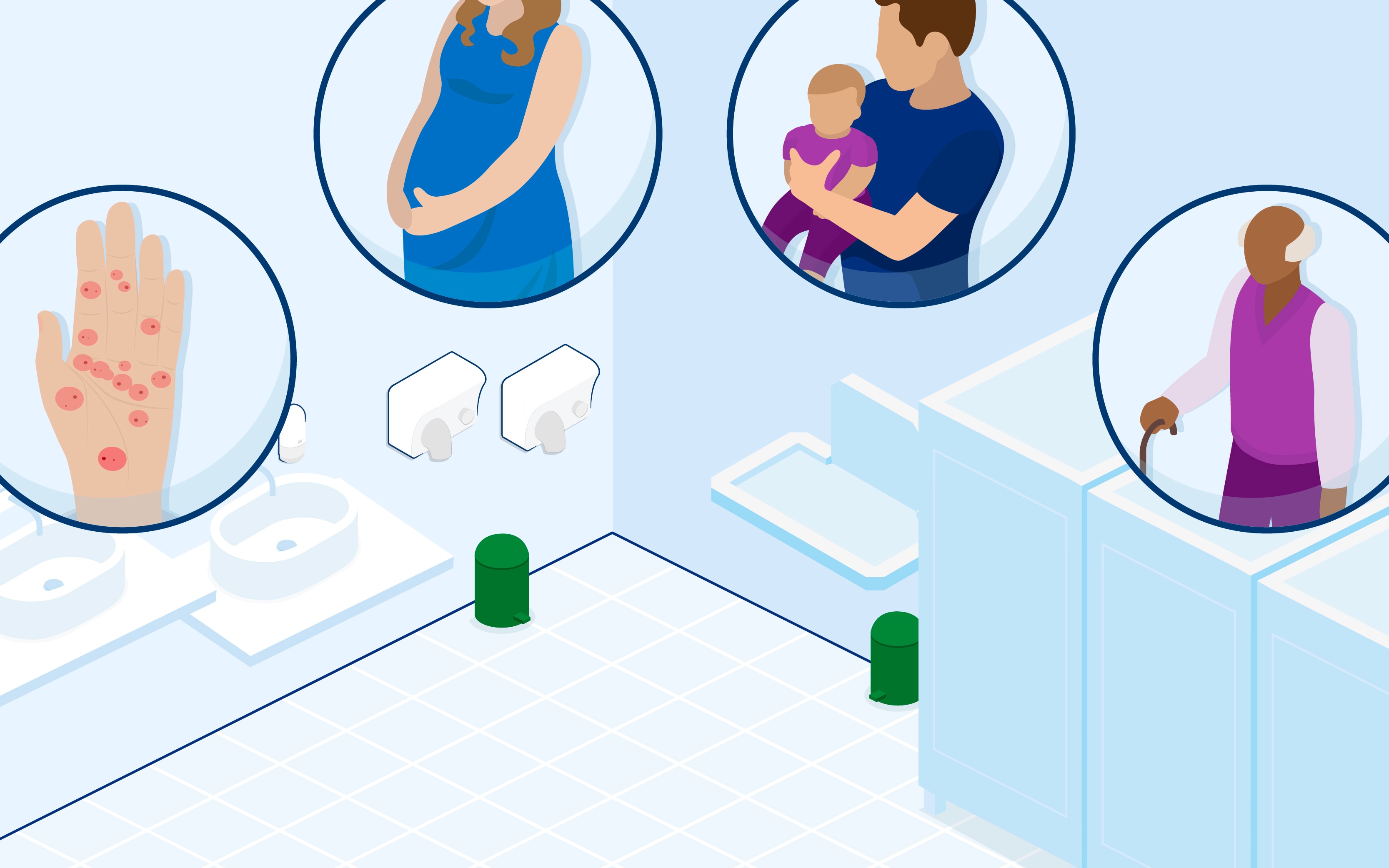
It's common for us to think of mobility limitations as a consideration for bathroom use. And while this may be the case, there are also numerous other ways individuals may face challenges in public toilets. For instance, someone with eczema might find that standard hand soaps irritate their skin because of harsh chemicals. At the same time, a person with sensory sensitivity (heightened reaction to sound, light, touch, or other stimuli) may be overwhelmed by the sudden blast of a hand dryer. Or for example, somebody with arthritis could struggle to press a stiff hand soap dispenser. To the people having such experiences, these aren't just minor inconveniences — they can be real obstacles that make public bathrooms stressful, uncomfortable, or even impossible to use.
Why is inclusive hygiene in restrooms important?
First and foremost, when public restrooms aren’t designed or managed with everyone in mind, users may skip basic but crucial hygiene steps, like washing their hands. This means compromising your sanitation standards and even the health of your customers and employees, not to mention your operational efficiency and productivity.
Consider how inclusive hygiene in restrooms is not only about meeting essential needs but also strengthening your business. When guests and employees feel welcomed, respected, and comfortable, they’re more likely to stay longer, return more often, and recommend your establishment to others. Not only that, but ensuring convenient access to public bathrooms for as many people as possible can also enhance your business’s reputation, having a direct impact on your bottom line.
How you can bring inclusive hygiene into your business’s restrooms
Accommodating for as many users as possible can feel like a daunting task. But it doesn’t have to be. There are many ways to achieve this, and the potential to reduce complaints, avoid negative reviews, and protect your business reputation and revenue makes it well worth the effort.
Let’s look at some ideas of what inclusive hygiene could look like in your facility:
Choose hygiene products that work for all
Good hygiene should also be barrier-free. That’s why it’s essential to ensure products and fixtures are suitable and effective for everyone. So, consider including the following ones in your restrooms:
- Touch-free hand soap and hand sanitizer dispensers: These dispensers offer convenient hand hygiene with minimal physical effort, making them an excellent option for people with grip difficulties. As a bonus, their touchless design helps reduce the spread of germs.
- Dermatologically tested hand soaps and hand sanitizers: They are kinder to individuals with skin sensitivities, such as eczema or allergies, while still working for all other skin types.
- High-capacity dispensers: These help reduce frequent refills and prevent hygiene product shortages, so your visitors have consistent access to the hygiene essentials they rely on. [2]
- Paper hand towel dispensers: They offer a more sensory-friendly drying option for people who are neurodivergent (individuals whose brain processes, learns, or behaves differently from what's considered typical) and may be sensitive to the loud noise produced by hand dryers.
- Sanitary bins and waste bins: Including them in all bathrooms makes it possible for anyone going through their period, bladder leakages, or recovery from surgery to change pads or tampons, incontinence products, and even stoma bags as needed.
Keep in mind that maintaining overall cleanliness is equally important to choosing the right products. So, assign your staff to regularly clean and disinfect high-touch areas in your facility’s restrooms, such as door handles, faucets, countertops, and flush levers.
Leverage technology to keep restrooms clean and stocked
Keeping hand soap, hand sanitizer, paper hand towels, and toilet paper well-stocked ensures that your restrooms are dependable, enabling comfortable access to hygiene for as many people as possible. Luckily, there are efficient and modern ways you can make this happen.
For instance, Facilities Management Software helps keep bathrooms well-equipped by giving your staff actionable data for cleaning and re-stocking. Using this type of technology means your cleaning teams can prioritize tasks like refilling supplies or deep cleaning only when needed, saving time and resources.
Another significant advantage of a centralized digital system is that it minimizes paperwork and manual tracking, streamlining your business processes and boosting your efficiency.
At the end of the day, bathrooms aren’t just functional necessities — they are a space for some of our most intimate and vulnerable moments. This means they play a larger role for your business than you may realize. Restrooms that promote inclusive hygiene and are well-designed can enhance trust, strengthen your reputation, and keep customers coming back. Potentially, a few small tweaks in your facility could have a big impact on your profits. In other words, inclusive hygiene isn’t just good practice — it’s smart business.
We know that making changes in your establishment can sometimes seem like a big effort, but improving your restrooms doesn’t have to be a struggle. If you're a small business owner wondering how to improve your bathrooms without overspending, our guide to essential restroom upgrades on a budget is a great place to start.